
How Can a -6°C Summer “Ignite” Consumer Demand?
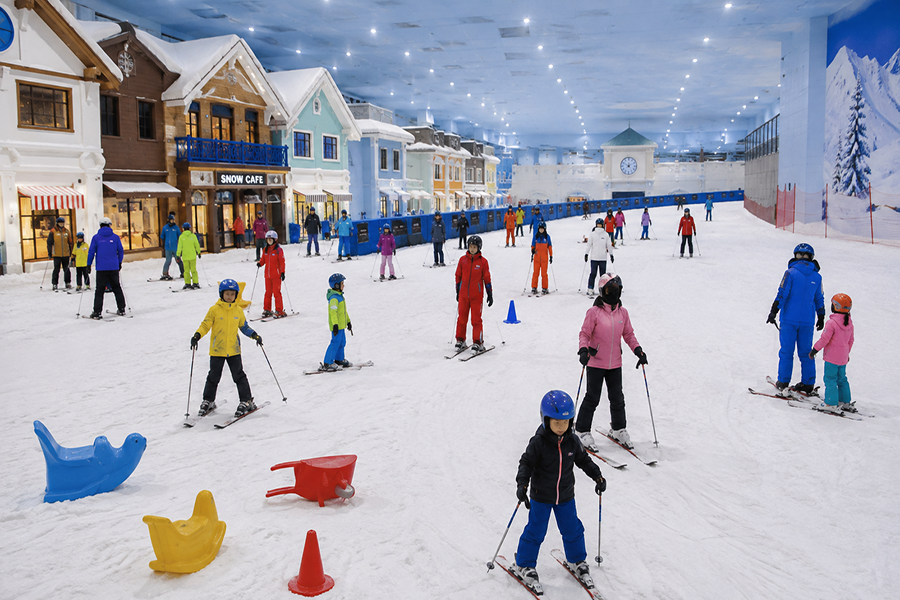
While a heat wave rolls outside, stepping through the doors of Wuxi Hot Snow Miracle Ski Resort in Jiangsu suddenly brings a crisp chill, with fine snowflakes blowing against your face. Down jackets, ski suits, snow boots and helmets—people who were wearing short sleeves just moments ago are suddenly bundled up from head to toe.
“Summer skiing is such a thrill, and I can ski right at my doorstep!” Wuxi resident Zhou Lin speeds down the 138-meter-long slope. As a beginner, she comes almost every week to practice. From starting with zero experience to confidently changing edges, the indoor ski resort has become the place she visits most often this summer.
Behind Zhou Lin, the beginner slope is filled with cautious newcomers taking their first steps. There are young parents holding their children’s hands, as well as college students arriving in groups. Lai Ping, head of marketing at Wuxi Hot Snow Miracle, told reporters that the number of ski visitors has risen sharply since the beginning of summer. “There are three major characteristics of this year’s summer traffic: families with children are the main consumer group, the proportion of visitors from surrounding cities has increased, and the demand for escaping the heat has become significantly stronger.”
“Outdoor temperatures remain extremely high, while the ski resort maintains a constant temperature of minus 6 degrees Celsius. The contrast between the two temperatures is a major attraction,” Lai said. To meet the needs of family outings, the resort launched a 4,000-square-meter snow-play area this summer. A Nordic-style fantasy snow house, a 100-meter ice slide and giant dragon ice sculptures have attracted a steady stream of visitors eager to take photos and “check in.”
Shanghai visitor Zhang Xiaoyi brought her child to ski, originally planning only to “cool off.” Instead, they ended up spending most of the day at the resort. “At first, we came for the cool temperature, but as soon as we entered, we were drawn in by the immersive ice-and-snow activities and atmosphere.”
A similarly lively scene can be seen in Taicang, Jiangsu. At the Taicang Alps Snow World indoor ski resort, more than a hundred pet dogs wag their tails and run joyfully across the slopes, prompting cheers from onlookers. This is the resort’s first-ever “Pet Skiing” event this summer, attracting large numbers of pet owners from Shanghai, Jiangsu and Zhejiang. Meanwhile, events such as the “Snow Splash Festival” and “Snow Mountain Beer Festival” are also being held, making this ice-and-snow landmark in the Yangtze River Delta particularly lively during the summer holiday.
Li Ling, General Manager of Brand Marketing at Taicang Alps International Resort, said that the resort has received more than 350,000 visitors so far this year, significantly exceeding expectations, and summer traffic is expected to surpass 200,000 visitors. Youth ski training has been another major highlight. The “Skiing Summer Camp” has been fully booked for every session, with more than 500 registrations from July to August. Summer training courses are currently fully scheduled.
“We are committed to breaking away from the logic that ‘one ski ticket only means skiing.’ By driving the business through four dimensions—sports competitions, festival activities, pet socializing and the nighttime economy—we are transforming skiing from a winter sport into a summer micro-vacation experience combining entertainment, social interaction and live performances,” Li said. Summer traffic has driven hotel bookings in surrounding areas up by approximately 40% year on year. Ice-and-snow consumption is extending beyond the resort itself, shifting from “selling tickets” to “selling a lifestyle.”

Data from online travel platforms show that since July, bookings for indoor skiing nationwide have doubled year on year. Shanghai Yao Snow and Ice World has been extremely popular this summer. Shenzhen Qianhai Snow World, which opened less than a year ago, has welcomed more than one million visitors in total. Lujiang Zhanshan in Anhui has adopted a “countryside + ice and snow” approach, linking its indoor ice-and-snow center with mountain camping and countryside fruit-picking experiences.
The recently released Research Report on the Mass Ice and Snow Consumption Market (2025–2026 Ice and Snow Season) shows that China’s ice-and-snow sports participation reached 308 million people during the 2025–2026 season. By the end of last year, the country had 2,626 ice-and-snow sports venues, many of which are located in southern regions where snowfall is rarely seen. Driven by the strategy of expanding ice-and-snow activities southward, westward and eastward, indoor ice-and-snow venues have become an important vehicle for southern cities to make up for their lack of winter sports resources and promote the integration of culture, sports and tourism.
From a “seasonal boom” to “year-round popularity,” the potential of the ice-and-snow economy in southern China continues to expand. Lai Ping said that Hot Snow Miracle now operates 11 indoor ski resorts across the country. “In the future, we will deepen the integration of ‘ice and snow + education’ and ‘ice and snow + competitions,’ introduce more international-level events, and leverage our nationwide network to facilitate the exchange of visitors between regions.” Li Ling believes that the next step is to further integrate different business formats and develop distinctive themed activities for different seasons, “ensuring that ski resorts have no off-season throughout the year.”
“Instead of viewing the north and south as competing for visitors, we should see them as passing the baton to each other and forming an organic, complementary whole,” Li Ling said. Northern China has unique natural snow resources and a deep competitive skiing heritage, making it a training ground for skiers looking to advance their skills. Southern China, meanwhile, has a huge consumer market and high-frequency indoor venues, making it the main base for introducing and popularizing skiing. “When young people in the south fall in love with skiing and travel north to experience natural snow resorts as they advance their skills, a positive cycle of ‘nurturing talent in the south and developing talent in the north’ is created.”
Last year, China’s ice-and-snow economy surpassed the RMB 1 trillion mark for the first time. Wu Guoping, Chairman of the Strategic Planning Committee of Wuxi Lingshan Cultural Tourism Group, said that the north and south can work together to continue expanding the “ice-and-snow economic pie.” “For example, the north can focus on winter outdoor skiing tourism, while the south can focus on year-round indoor experiences. The two sides can promote technology sharing and the exchange of visitors, jointly launch ‘Winter North, Summer South’ themed routes, and even explore co-branded IPs for ice-and-snow tourism and cooperation on sporting events.”
source:新华网