Why Has Freeride Become a New Olympic Event?
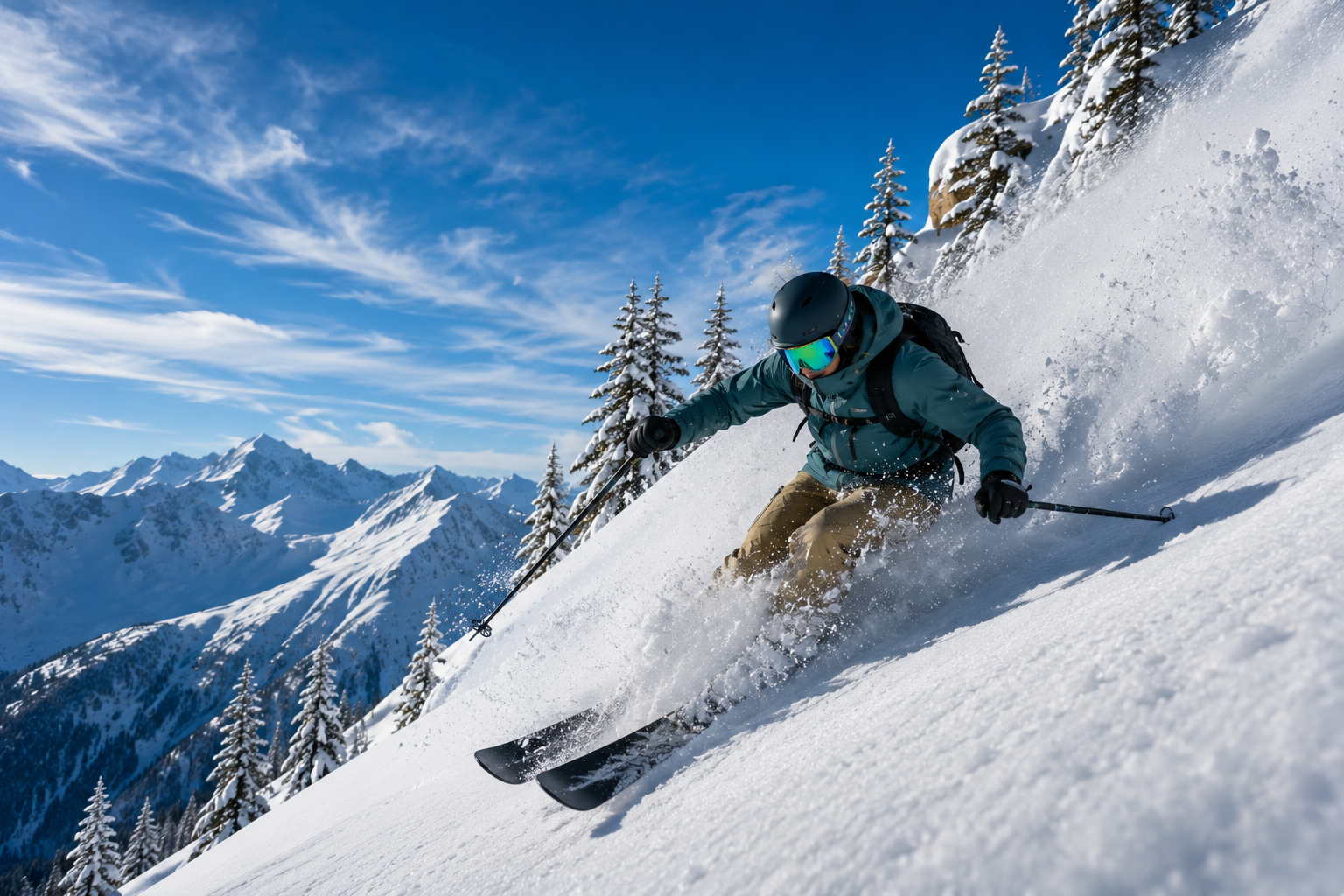
In the event program for the 2030 French Alps Winter Olympics, formally approved by the IOC Executive Board on the 7th, a brand-new name has appeared on the list: Freeride. The sport has previously been referred to in Chinese as “freestyle freeride” and “backcountry skiing,” while the Chinese translation currently used on the International Olympic Committee’s official website is “Alpine Freeskiing.” Although it is not yet widely known among Chinese audiences, it has already attracted a large following in Europe and North America.
What exactly is Alpine Freeskiing, the backcountry discipline? Why has it been included in the Olympic program? What is the barrier to entry? And how can concerns over the sport’s safety be addressed? The reporter gathered relevant information and conducted an exclusive interview with Nicolas Hale Woods, CEO of the Freeride World Tour (FWT), the organization responsible for operating the sport.
What Is Alpine Freeskiing?
“Wild”—meaning that it does not rely on man-made terrain or prepared courses—is the most distinctive feature of this new Olympic discipline compared with traditional Winter Olympic events.
“Alpine Freeskiing competitions take place on 100% natural, untouched mountain terrain. The sport aims to showcase the inherent features of the mountain in the most exciting and raw way possible. There is a start at the summit and a finish at the bottom, with snowboarders and skiers navigating snow cornices, cliffs and steep couloirs, performing spectacular jumps and high-speed turns...” This is how the FWT website describes the competition setting of its premier events.
The discipline is judged on a scoring system, with judges assessing athletes based on the difficulty of their moves, skiing stability, line choice and speed. It is important to note that, unlike snow park disciplines such as halfpipe and big air, where trick difficulty and execution are the core scoring criteria, Alpine Freeskiing is judged across a broader range of dimensions, with greater emphasis on the overall fluidity and logic of the run.
According to the event program recently disclosed, Alpine Freeskiing at the French Alps Winter Olympics will feature four events: men’s snowboard, women’s snowboard, men’s ski and women’s ski, with four gold medals at stake. Its significance should not be underestimated.
The standardization and development of freeride into an organized competitive discipline would not have been possible without the efforts of the FWT. Founded in 1996, the event series developed for more than two decades before the International Ski and Snowboard Federation (FIS) acquired it in 2022 and integrated it into the FIS system. Following the acquisition, the process of bringing freeride to the Olympics accelerated significantly. According to Nicolas, the FWT’s operating model, business model and team have remained largely unchanged since the acquisition by FIS.
FWT qualifying events have previously been held at Hemu Jikepulin Ski Resort in the Altay region of Xinjiang, China. Nicolas praised the area for its abundant natural snowfall and excellent mountain terrain.
Its Rapid Path to the Olympics Was No Accident
“Our development path is very similar to that of surfing, skateboarding and sport climbing, all of which have successfully entered the Olympic Games in recent years... The most important reason is their ability to attract younger audiences,” Nicolas pointed out.
According to him, freeride is very similar to surfing, which has established itself as an official Summer Olympic event. “We share many similarities in terms of sporting culture, competition formats and participant demographics. Surfing’s inclusion in the Olympics provided a very important reference point for freeride.”
“Freeride skiing and snowboarding have a strong influence among young people worldwide. As of 2026, FWT events have been held in 23 countries and regions, with 218 events staged. More than 10,000 registered athletes from 76 countries and regions have participated, and participation continues to grow... The sport is highly spectacular and has strong value for television broadcasting. These factors are precisely what attracted the International Olympic Committee’s interest in freeride,” Nicolas said.
According to him, in addition to considerations such as the sport’s popularity and market appeal, the IOC also conducted a comprehensive assessment of safety standards and the operation of high-level competitions.
Regarding concerns that changing weather and snow conditions could make competition schedules difficult to control, Nicolas believes mature solutions are already in place: “Competitions typically establish a window of several consecutive days and select the safest time to compete based on weather and snow conditions. This is similar to how Olympic surfing events are operated.”
The Barrier to Entry Is Not as “Extreme” as It May Seem
Freeride is often perceived as an extreme sport, creating the impression that it is only accessible to elite skiers. But that is not the full picture. Like alpine skiing and surfing, freeride has both a highly competitive “Olympic version” and a more accessible “recreational version” for ordinary enthusiasts.
“I prefer to define freeride as an ‘action sport.’ On slopes with moderate gradients and controlled, safe conditions, intermediate skiers can absolutely participate,” Nicolas said.
Looking at the current FWT competition structure, ordinary skiing enthusiasts make up the majority of participants in lower-level qualifying events. Nicolas noted that the shift of snow sports competitions and skiing activities from groomed slopes into ungroomed terrain reflects the expanding interests and abilities of today’s skiers. “For the ski industry, whether it is ski resorts, equipment manufacturers or the tourism sector, everyone needs to adapt to new trends in order to remain competitive. In fact, freeride has already become an important part of ski resorts and the ski industry as a whole.”
“Compared with Olympic disciplines such as ski slopestyle and aerials, the barrier to participation in this sport is actually lower. You do not need to reach a professional competitive level to enjoy it,” he explained.
“Once it becomes an Olympic event, national and regional ski associations will gradually establish high-level athlete development systems while also promoting grassroots development, including ski clubs, youth academies and various competition programs.”
Freeride has only been developing in China for a relatively short time. One Chinese athlete who has appeared frequently on the international stage is Zhang Jiahao. Zhang was previously a snowboard park discipline athlete. He said he hopes to earn enough points by participating in FWT events at various levels and ultimately realize his dream of competing at the Winter Olympics.
Standardizing Freeride Competitions Can Help Promote Ski Safety Awareness
Although FWT events have previously been held in Hemu, concerns about safety have remained in China. This is because natural snow conditions and mountain terrain involve risks such as avalanches and terrain traps. Given the uneven levels of safety awareness and avalanche safety equipment among skiers, large-scale mountain ski resorts in China generally do not encourage skiers to cross the boundaries of marked runs and attempt freeride terrain. During the 2025–2026 ski season, the FWT qualifying event originally scheduled to take place in Hemu was temporarily cancelled due to the need to investigate and address avalanche risks.
Nicolas does not shy away from this reality. He believes that safety has always been FWT’s most important priority, but it also requires joint efforts from ski resorts and the skiing community.
“Freeride is an emerging discipline in China, and a more comprehensive development system needs to be established. This includes setting up professional avalanche patrol and safety management teams at ski resorts, strengthening skier education and training, and continuously promoting safety awareness.”
“Being included in the Olympic Games will further drive the development of these safety and education systems,” Nicolas said.
A Chinese ski resort operator previously told the reporter that the introduction of freeride competitions in Hemu had effectively helped provide ordinary Chinese ski enthusiasts with basic education on avalanche safety. For example, the mandatory “avalanche safety kit” required in FWT competitions later became a mandatory requirement for accessing the resort’s off-piste areas. Through participating in event operations, the resort’s patrol team also gained valuable experience in emergency response outside marked ski runs.
Source: Xinhua News Agency