
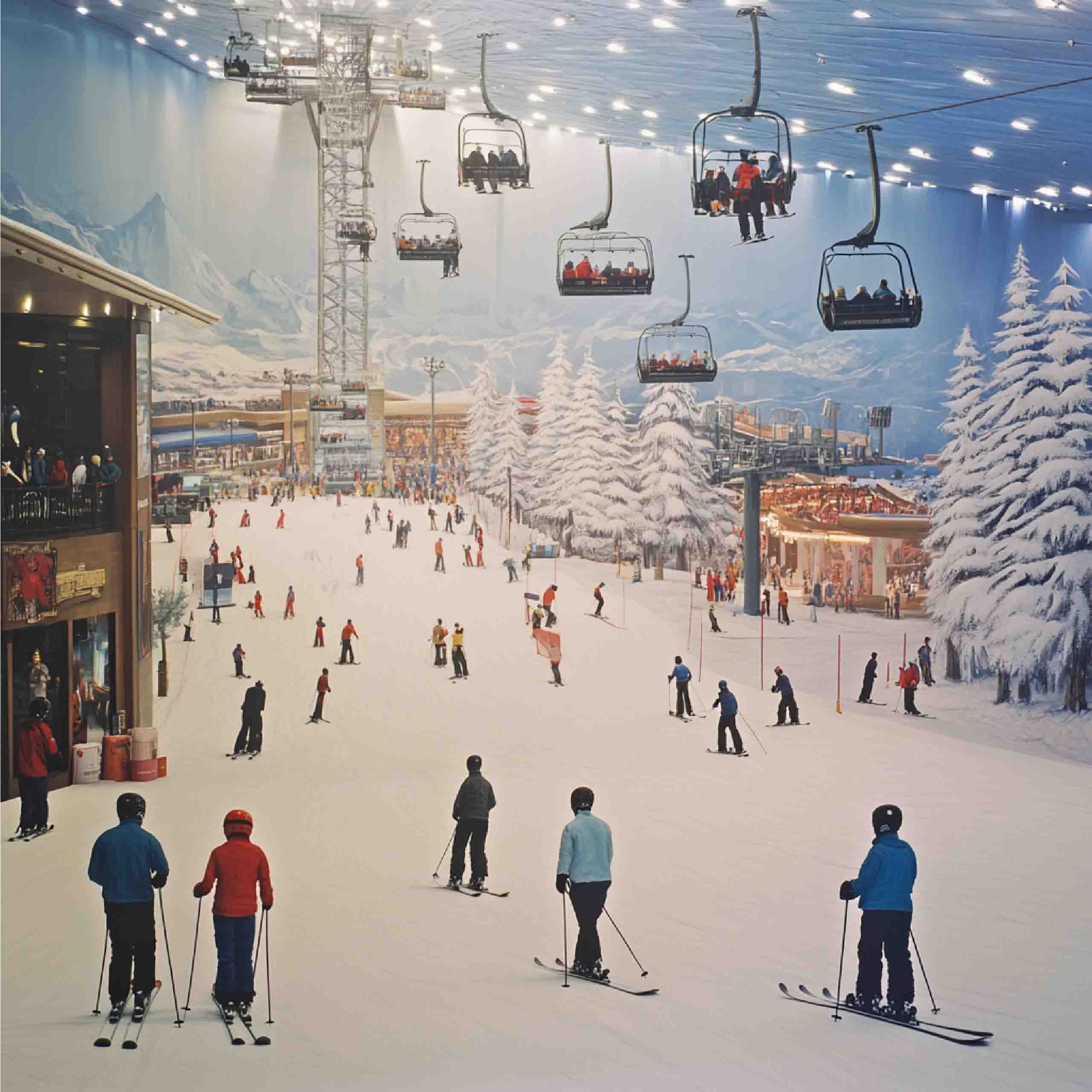
China’s passion for skiing is no longer limited to the snowy mountains of the north. Across the country’s warmer southern cities, indoor ski facilities are bringing winter sports directly into urban life — even inside shopping malls.
In Wuhan, a major city in central China where natural snowfall is rare, indoor ski slopes have become a surprising new attraction. Inside a bustling mall, visitors can find Nordic-style wooden cottages, artificial snow-covered rooftops, and a 200-meter ski slope filled with beginners and enthusiasts alike.
Over the past two months alone, Wuhan’s four indoor ski facilities have welcomed more than 420,000 visitors, reflecting the growing popularity of winter sports in regions traditionally considered unsuitable for skiing.
For many visitors, the convenience is part of the appeal. Travelers like Li Mengshi from Guangzhou can explore the city, enjoy a meal in the mall, and then head upstairs for a skiing session — all in one day.
Indoor ski centers are designed to make the experience easy and accessible. A typical three-hour ticket costs around 188 yuan (about USD 27), while a day pass costs approximately 258 yuan. Equipment such as ski boots, helmets, and winter clothing suitable for the –6°C indoor temperature are included, allowing beginners to participate without any prior preparation.
This “lightweight skiing” experience is transforming the sport from a destination activity into a casual urban pastime.
Since the Beijing 2022 Winter Olympics, indoor ski slopes have rapidly expanded across China, turning what was once considered an elite and seasonal sport into an accessible year-round leisure activity.
According to the General Administration of Sport of China, by April 2025 there were 55 indoor ski facilities operating in southern provinces. The growth has been especially significant in major metropolitan regions. In 2024, Shanghai opened the world’s largest indoor ski resort, only for that record to be surpassed in 2025 by an even larger facility in Shenzhen.
This development has helped southern China join the country’s broader push to promote winter sports tourism and the so-called “ice and snow economy.”
Industry data shows that visits to ski facilities nationwide reached 26.05 million during the 2024–2025 winter season, representing a 12.9% year-on-year increase. Provinces such as Zhejiang, Hubei, Guangdong, and Sichuan ranked among the top regions in the country for ski visits, highlighting the rapid growth of winter sports beyond traditional northern ski destinations.
China’s government has set ambitious targets for the sector. According to national development guidelines, the ice and snow economy is expected to reach 1.2 trillion yuan by 2027 and 1.5 trillion yuan by 2030, positioning winter sports as a key driver of future consumption and tourism growth.
The rise of indoor skiing is also encouraging deeper participation. Enthusiasts often begin with casual visits before investing in equipment and training. Some frequent visitors now ski dozens of times a year and spend thousands of yuan on specialized gear such as snowboards and custom boots.
However, indoor ski facilities also face operational challenges. Unlike natural mountain resorts, these venues rely on artificial snow and constant refrigeration, resulting in significantly higher operating costs.
To remain sustainable, operators are increasingly focusing on year-round programming and youth training programs. Summer months — traditionally considered off-season for winter sports — have become peak periods for indoor ski centers in southern cities.
Many operators are also partnering with schools to introduce skiing to younger generations, helping cultivate future athletes and regular participants.
For families like that of seven-year-old Min Yuze in Wuhan, indoor slopes have become part of weekly life. The young skier now trains regularly and plans to participate in his first competitive race in 2026.
As indoor ski facilities continue to expand across urban China, winter sports are evolving from seasonal mountain travel into an everyday lifestyle activity — bringing the thrill of skiing to millions of new participants across the country.